

The Human Capacity for evil
- Shyline.M
- Nov 3, 2025
- 10 min read
Updated: Nov 3, 2025

I would like to start by saying I am not a gamer, I actually know nothing about gaming, my parents did not allow us to play video games growing up. But I have played a few here and there with friends, like mortal combat and the likes. Hence I too am guilty of some of the things that I am criticizing in this essay.I am also not a critic, just an observer with an opinion. I love to have conversations about the things that I observe, and learn other people’s perspectives, so if you disagree, fight me… <3
I am deeply fascinated by the human capacity for evil, do really good people exist? Or only good choices?
This essay originates from a deep ethical concern sparked by the video game Blood Money!, (I have not played the game, and I will not… I have seen enough). Players are financially rewarded for inflicting escalating gore and cruelty. I argue that this type of interactive media crosses a critical moral boundary: it does not explore the nuances of evil, but actively tests the human capacity for evil by eliminating risk and normalizing transgression. Drawing parallels to the 1974 performance Rhythm 0 and analyzing spiritual principles, I assert that the true path to moral strength lies in the conscious choice of non-engagement—to stop testing one’s morals and start living them.

1. The Core Offence: The Test of Blood Money!
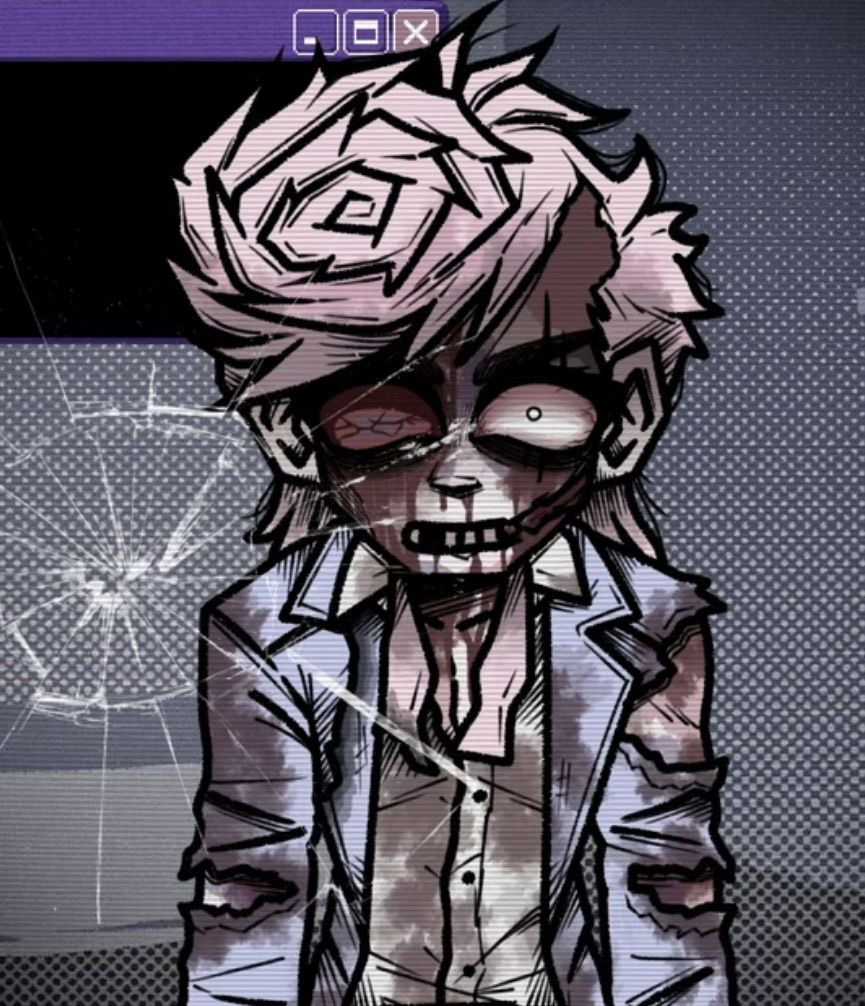
The central problem that sparked this inquiry is the architecture of games like Blood Money!. The premise is simple and insidious: inflict harm on the digital character, Harvey, to earn money. The core ethical failure here is that the game provides a direct, efficient, and immediate positive reward for cruelty.
When given the choice between poking Harvey with a feather (a slow, tedious path) and using a sharp, damaging weapon (a fast path to the $25,000 reward), the game’s design incentivizes maximum transgression. This is a terrifying manipulation that transforms a moral choice into an economic calculation. Violence is no longer a failure or a tragic necessity; it becomes a tool of efficiency, training the player’s brain to associate escalating cruelty and gore with positive reinforcement (money, completion, satisfaction).
The Peril of the Fourth-Wall Break
This manipulation reaches its peak when the game's victim, Harvey, breaks the fourth wall to address the player directly: "You're only doing this in a game because you can't actually do it in real life."
This moment is an act of profound psychological escalation. It strips away the fictional safety, turning the violence into a moral challenge. For a person struggling with mental illness or dark impulses, this line is not a critical observation; it is an echoing voice of temptation. It dares the player to validate their strength by proving Harvey wrong, blurring the final line between the safe, ludic space of the game and the profound reality of physical action. The fact that the voice actor is so convincing only heightens the psychological pressure, making the digital confrontation feel chillingly real.
The Game Blood Money Crosses some boundaries, I would like to bring your attention to 3 game Principles that the Game does not honor.
Prioritize Consequence Over Reward ( The ‘’moral cost’’ Principal). In the game Blood Money, one could argue that there are consequences for harming Harvey, and to an extent they are there, but only in the story and not in the actual game. Clint Hocking in 2007 described this conflict as Ludonarrative Dissonance. He was referring to a game called Bioshock where the story advocates for selflessness, but in the game, you get a larger reward for killing the little sisters. In Blood Money, the game also advocates for selflessness, but you get a bigger reward the worse you harm Harvey. Both games reward the player for acting selfishly. The rewards and consequences in a game are manipulative, game designers have the choice to design that manipulation in a meaningful way. I believe in Blood Money, they did the absolute opposite.
Emphasize the narrative Purpose(The justified Violence): The Principal asserts that if violence is in the game, it must serve a purpose, within the context of the story, but it should also explore some consequences to the violence. In Blood money, The violence is a tool to get money, the only efficient way to get your reward money is by accelerating the harm on Harvey. Critics often advocate for games to tell, and execute stories that do not solely revolve around violence, looking for nuanced conflict resolutions. Blood money fails this by reducing the conflict resolution to a single, hyper efficient violent loop.
Provide Non-lethal Alternatives (The meaningful choice): A game not only has non-lethal options, but those non-lethal options should be as rewarding as the lethal option. A lot of games coerce players through design, in games like Dishonored, the non-lethal, or low chaos path is actually boring, it's harder and restricts players from the fun abilities. In Blood money, the non-lethal way is tedious, long and boring, while the lethal or harmful way gets better results.
The game Blood Money, such like other violent games, is more about testing your morals than practicing your morals. I believe that everyone has the capacity of evil within them, and there is no such thing as testing morals, rather practicing them, testing morals is an act of realising that capacity for evil within all of us. In a game like blood money where there are no real consequences to acting evil it all seems like fun and games. Evidently, more and more, these games have been leaking into real life, with the rise of black pill content, violent incel discords and telegram groups and all the likes, games like Blood money add fuel to the fire, or maybe just maybe, games like blood money started the fire.
2. The Evasion of Consequence: The Failure of the Real-World Test
To understand the difference between this digital test and true moral exploration, I looked to the real world: Marina Abramović’s six-hour performance, Rhythm 0.
In this performance, the audience was given permission to do anything to the artist. The actions escalated from loving to abusive to genuinely life-threatening with the introduction of a loaded gun. The performance operated under a ludic agreement—a temporary suspension of real-world consequences. However, the experiment failed because the consequences were never truly suspended.
The moment the loaded gun was pointed at Abramović's neck, the entire atmosphere shifted from playful transgression to existential threat. The audience’s ultimate reaction—fleeing in shame and terror when Abramović stood up, traumatized but alive, at the end of the six hours—confirmed my belief: the participants only felt safe indulging their "evil urges" while the artist was passive and the social contract was suspended. The moment the victim's humanity was reasserted, the floodgates of guilt, shame, and fear of legal consequence slammed back down.
Blood Money! attempts to eliminate this guilt completely by making the victim digital and the reward economic. But the fear remains: what happens when groups of individuals, desensitized by such digital tests, gather in anonymous online spaces? In radicalized online communities, the individual shame that stopped the Rhythm 0 audience is diffused and neutralized by collective support, making the journey from digital cruelty to real-world harm terribly short.
What I am trying to say is if only individuals from one of the 1000 discord groups that exist in our world today, filled with men, women and children who find pleasure in gore, if only their kind attended that performance by Marina Abramović, would she have come out of there alive? I fear that the Online Disinhibition Effect leaks into real life, the dark things that happen in these online social spaces has been penetrating real life society, so much death hand evil has already occurred because, I know this, not because I watch the news, but because I follow rotten mango on youtube, hahaha

3. The Psychological Bridge: From Digital Test to Real-World Trigger
My fear is that the combination of transgressive media and a traumatized society creates a vicious cycle. We are seeing a rise in mental vulnerability due to social media, trauma, and isolation. These factors create the pre-existing pathology for dark behavior to take root.
In this context, media ceases to be a safe exploration and becomes a dangerous trigger or validating script for vulnerable individuals:
The Case of Ed Gein: The serial killer Ed Gein was afflicted by severe mental illness. His fascination with images of Nazi atrocities was not the cause of his pathology, but a powerful reinforcing trigger. It acted as a perverse form of historical validation and instruction, helping him translate his internal psychoses into monstrous external action.
The Case of Social Contagion: I had a friend who started self-harming and overdosing on whatever pill she could find after watching a Euphoria she was engaging in copycat behavior through intense identification with a Rue's pain. While this is different from the aggression promoted by Blood Money!, it demonstrates how vulnerable minds can turn fictional exploration into a harmful real-world act.
The critical difference remains that the stories and series explore the consequences of self-destruction and trauma, like jail, losing a job, disconnecting from your family, hurting other people’s families etc. while the game rewards the performance of cruelty.
4. The Moral Antidote: The Power of Non-Engagement
This distinction led me to my most important realization: that true moral power lies in refusing the invitation to test one's evil capacity. Evil tempts us not to test our goodness, but to release a known, destructive force—a Pandora's Box we should never open.
I found powerful examples of this Resistance through Non-Engagement across various spiritual traditions, which I believe hold universal truth:
Christianity (Jesus in the Desert): When tempted by the Devil to prove his divine power, Jesus refused to engage in the debate or the physical test. He simply invoked a higher authority ("Do not put the Lord your God to the test"), thus protecting his boundary without having to confront the temptation directly.
Buddhism (Siddhartha Gautama and Māra): As Siddhartha sought enlightenment, Māra, the spirit of temptation, attacked him with armies and seduction. Siddhartha did not fight or yield; he remained in absolute stillness and meditation. By refusing to react, he rendered the temptation powerless.
Islam (Prophet Muhammad and the Quraysh Leaders): When offered wealth and kingship to compromise his message, the Prophet gave an immediate and firm refusal. He did not test how close he could get to the boundary, but immediately asserted a clear, non-negotiable principle: "To you be your religion, and to me my religion."
In all three cases, the spiritual figures recognized the temptation as a trap and chose non-engagement as the strongest form of defense.
Furthermore in the ‘’The artists way by Julia Cameron, Julia speaks of a Censor, a voice in every artist's mind that whispers the most evil things to you on a daily basis, and listening to this censor, or trying to fight it, could lead to the worst kind of creative block. Rather she wants her readers to listen and not engage, she says write down what it says, acknowledge it then continue about your creative ways, because in reality what it says has nothing to do with you, it's just there.
In essence you do not have to be religious to understand the principle of non-engagement
5. Defining Ethical Creation: Exploration vs. Testing
This wisdom highlights the necessary ethical guidelines for creators, particularly in interactive media. Blood Money! violates these principles by being a fundamentally irresponsible piece of design:
Principle of Responsible Design | Blood Money! Violation |
Prioritize Consequence Over Reward | Violated: The game financially rewards the most severe acts of gore, making cruelty the most profitable path. |
Emphasize Narrative Purpose | Violated: Violence is instrumental (a means to an end—money), not a meaningful exploration of consequence, relying on shock value instead. |
Provide Non-Lethal Alternatives | Violated: While a non-lethal path exists (the feather), it is designed to be tedious, effectively forcing the player toward the violent option for efficiency. |
Respect Vulnerability and Context | Violated: The game's explicit gore and the fourth-wall break are designed to challenge and provoke a transgressive reaction in the player's real-world identity. |
My own work—I write short stories; psychological thrillers that sometimes include self-harm and assault— so while I was busy criticizing the existence of Blood money I asked myself if I am doing the exact same thing as the games. After much arguing with myself I came to the conclusion that my stories are ethically distinct because they operate in the realm of Exploration and also offer consequences to violent acts, furthermore, the reader acts as a third party to the story and is not actively involved in the violence, they are just watching the story unfold. My goal is to use the stories to examine the psychology of the break, allowing the reader to experience catharsis and reinforce their own moral code by witnessing the fictional consequences. Just like Aristotle said.
While some argue the game provides a safe release for dark impulses (the Venting Hypothesis), Blood Money! actively invalidates this by positively rewarding the most extreme transgression, thus acting as a training loop rather than a cathartic release
This journey has brought me to a firm and necessary conclusion. The world is made scary not by the existence of evil concepts, but by the proliferation of systems (like Blood Money! and radicalizing online groups) that test and reward our capacity for cruelty. Games like blood money should have never existed, but they already, and I really doubt they are going to stop anytime, all we can do is offer analysis such as this one, but like we have seen in history over and over again, evil exists and continues to thrive, because the pandora’s box has already been opened. I There is a silver lining, some people teach their children the dangers of testing your morals, they teach them not to harm others and be kind, someone might read this and not play the game at all, but its only a single silver lining, a single dove from pandora’s box, Call me pessimistic but I don’t think that one dove or that one line can save us all from the havoc that is infested in our world.
We must embrace our stories and art for the vital self-reflection they offer, but we must fiercely guard our internal boundaries. I now understand that my power lies in refusing the test. I will stop attempting to prove what I can withstand, and instead dedicate my energy to living my morals.
Art References
1. The Game: Blood Money! (The Test of Evil)
Developers/Publishers: SHROOMYCHRIST
Release Date: August 3, 2025 (Specific version BLOODMONEY! on PC).
2. The Performance: Rhythm 0 (The Real-World Test)
Artist: Marina Abramović (Serbian performance artist).
Date: 1974 (Six-hour endurance performance).
Location: Galleria Studio Morra, Naples, Italy.
3. The Series: Euphoria (Exploration of Self-Harm and Trauma)
Creator: Sam Levinson.
Network: HBO.
Original Release Date: June 16, 2019 – present.
4. The Series: 13 Reasons Why (Exploration of Suicide Contagion)
Developers/Executive Producers: Based on the book by Jay Asher; television adaptation executive produced by Selena Gomez, Tom McCarthy, and others.
Network: Netflix.
Original Release Date: March 31, 2017 – June 5, 2020.
5. The Series: Monster: The Ed Gein Story (Exploration of Psychosis)
Note: This is the third installment in an anthology series.
Showrunner/Creator: Ian Brennan (and Ryan Murphy).
Network: Netflix.
Other References
Book: Cameron, J. (1992). The Artist's Way: A Spiritual Path to Higher Creativity. Publisher: J. P. Tarcher.
Aristotle. Poetics (c. 335 BCE).
Game: Dishonored. Developer: Arkane Studios. Publisher: Bethesda Softworks. Release Date: October 9, 2012.


Comments